
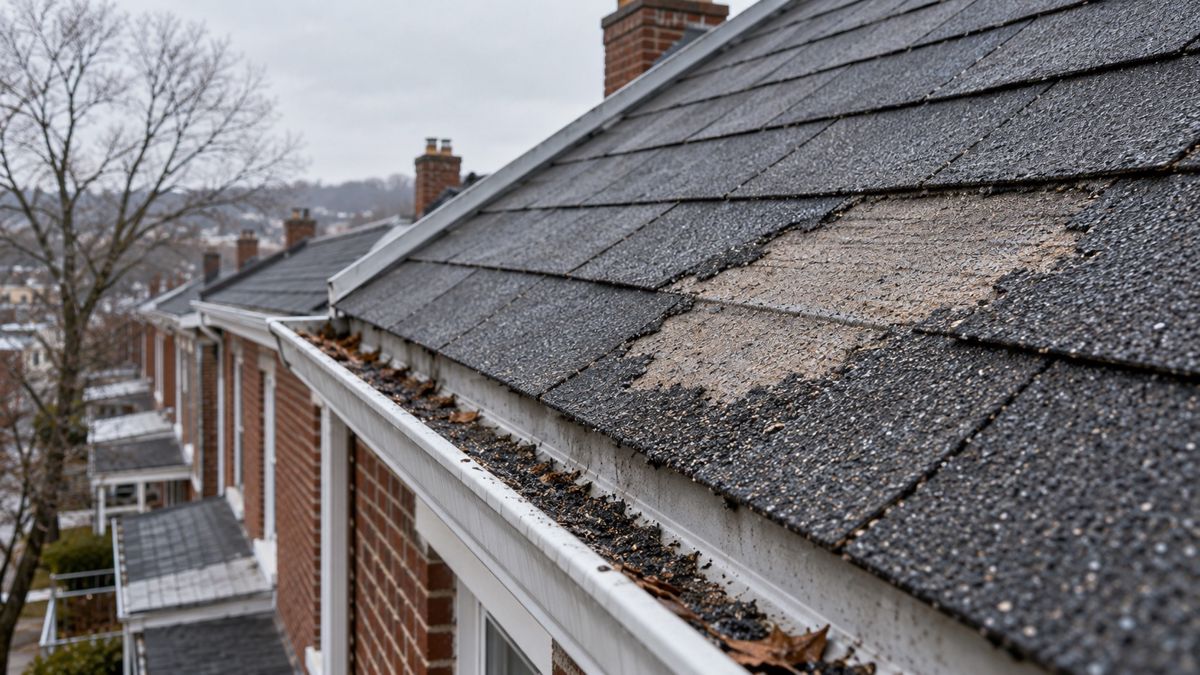
Yes, high pressure power washing can damage your roof shingles, and the damage is often hard to see until the next heavy rain. A pressure washer that is fine for a concrete driveway can strip the surface off an asphalt shingle in a few passes. This guide explains what goes wrong, why roofs in Reading, Pennsylvania get dark streaks in the first place, and how a roof can be cleaned without harming it.
Why are asphalt shingles easier to damage than they look?
Most homes in the Reading area wear asphalt shingles. Each shingle is a fiberglass mat coated in asphalt, with a layer of small mineral granules pressed into the top. Those granules are not decoration. They shield the asphalt from sun, help shed heat, and protect the roof from rain and hail.
Over time, shingles lose some granules on their own. That is normal wear. A roof that is already a decade or more old has less margin, and a blast of high pressure water speeds that wear up in minutes. Once the granules are gone, the asphalt underneath ages faster and the roof can fail sooner than it should.
How does high pressure actually damage a roof?
The harm comes in a few different forms, and several can happen on the same job.
- Granule loss. The spray knocks granules loose. You may see a bare patch, or a pile of grit in the gutters and at the bottom of the downspouts.
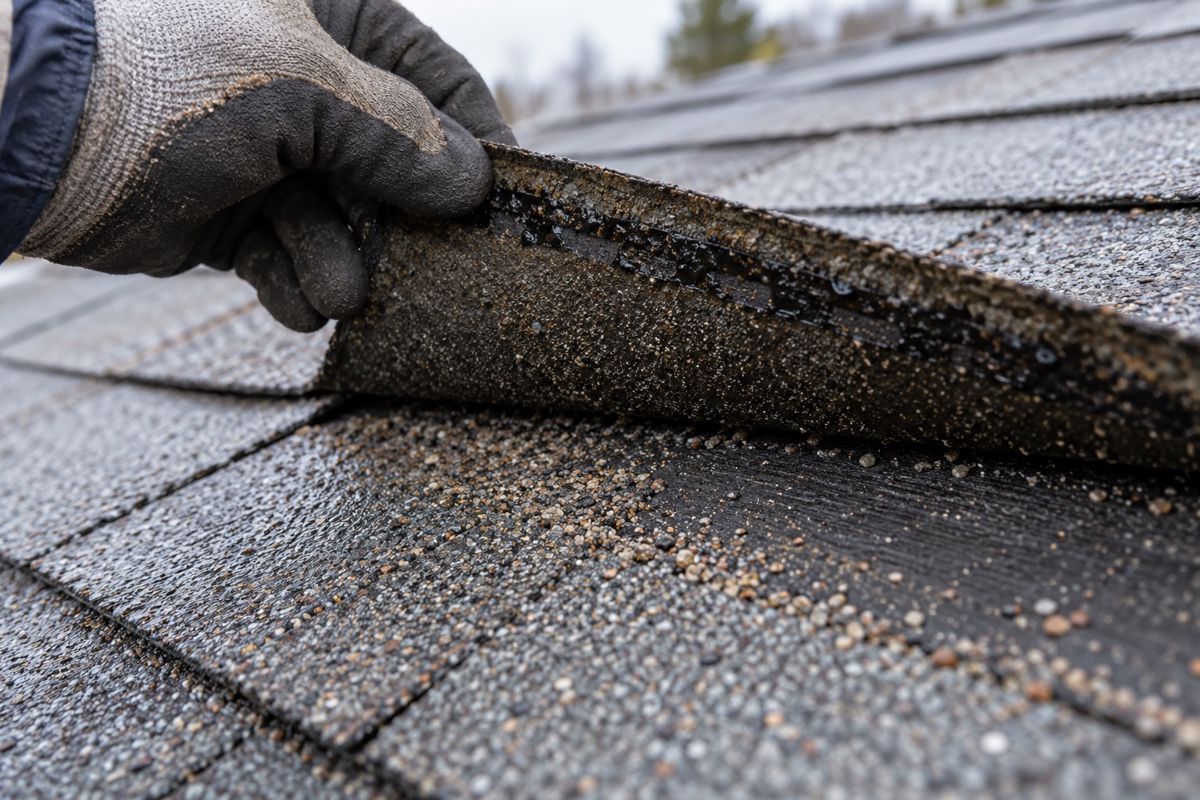
- Lifted or broken sealant strips. Shingles are held down by a thin line of adhesive. Water driven up under the tabs can break that bond, leaving shingles loose in the next windstorm.
- Water forced under the shingles. Roofs shed water downhill. Pressure sprays upward and sideways, which pushes water under laps and into the roof deck and attic insulation.
- Cracks and gouges. A spray tip held too close or in one spot can cut into the mat, especially on older, brittle shingles.
- Damage to flashing, vents and seals. Pipe boots, vent covers and the sealant around chimneys are small parts that are easy to loosen.
Many shingle makers say in their care guidance that pressure washing can void or reduce a warranty. If your roof is still under warranty, check the paperwork before anyone touches it.
Why do roofs in Reading get black streaks?
Those dark streaks are usually not dirt. In humid parts of the Northeast, including Berks County, they are most often a type of algae that feeds on moisture and on the limestone filler found in many shingles. Warm, damp summers help it spread, and shade from big oak and maple trees makes it worse. That is why the north-facing slope of a house often looks worst.
Streaks start small and grow outward and downward as rain carries spores along. They are mostly a looks problem at first, but a heavy covering can hold moisture against the roof surface, and a roof that looks neglected can make a buyer or an appraiser take a closer look. It is also why homeowners reach for a pressure washer. The urge makes sense. The method is the issue.
Moss is a different problem. It holds water and can lift shingle edges, so it needs gentle removal rather than a blast of water.
What is the safer way to clean a roof?
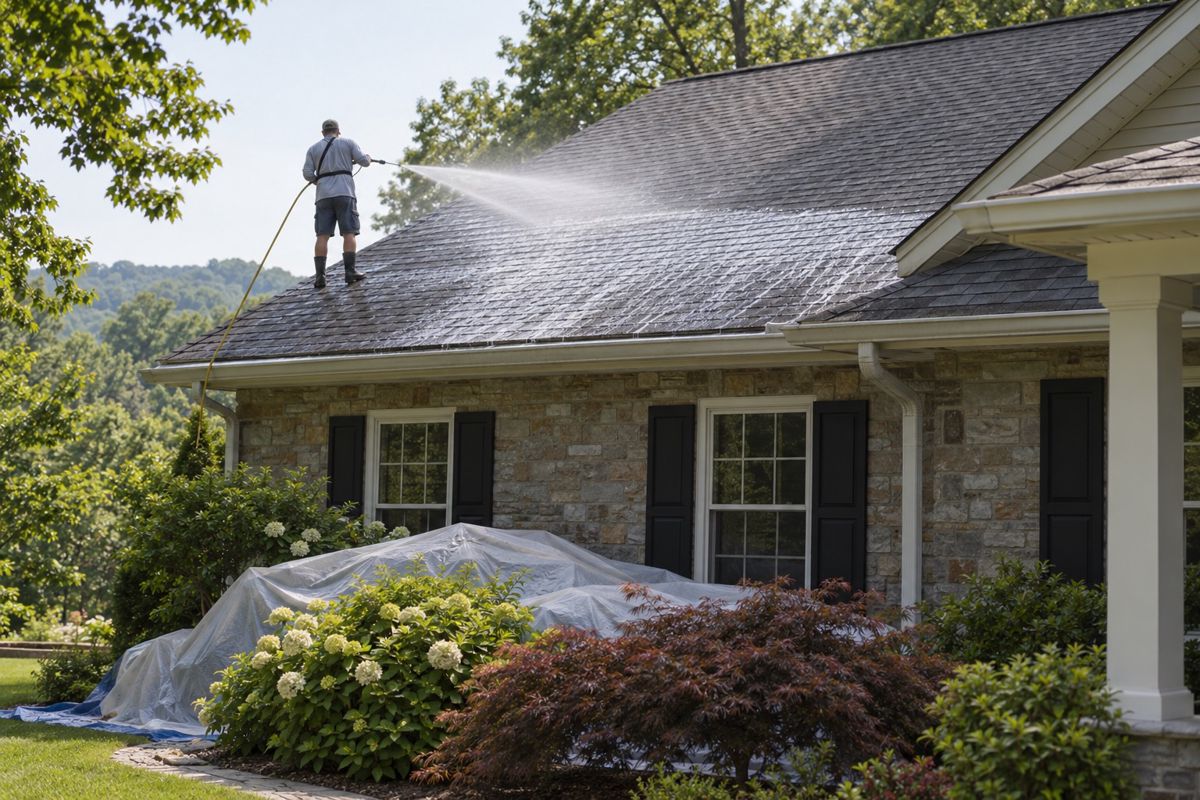
The method most roofing and exterior cleaning guides recommend for asphalt roofs is soft washing. It works by chemistry instead of force.
- A cleaning solution is applied to the roof with a low-pressure sprayer, about the force of a garden hose.
- The solution sits for a short time and breaks down the algae at its source.
- The roof is rinsed gently, so loosened growth runs off without scouring the granules.
- Plants, gutters and downspouts are protected and rinsed before and after.
Streaks often fade over the following days and weeks as the treated growth washes away in the rain, so the roof may not look perfect the moment the crew leaves. Roof cleaning is also best done above freezing, since wet shingles and ice are a slipping hazard and cleaning solutions work slowly in the cold. Spring and early fall are common times in this part of Pennsylvania.
What about slate, tile, wood shake and flat roofs?
Some older Reading homes have slate, and many rowhouses have low-slope or flat roof sections with a rubber or membrane covering. These surfaces have their own rules. Slate can crack under foot traffic and spray. Membrane roofs can be punctured or have their seams loosened. Wood shakes can splinter and soak up water.
The safe approach is the same on all of them: use low pressure, avoid walking where you do not have to, and follow the guidance of the roof maker. If you are not sure what your roof is, ask someone who knows before any cleaning starts. A wrong guess on an older roof can be an expensive one.
What should you ask a contractor before a roof wash?
A few plain questions will tell you a lot about how a crew works.
- How will you clean my roof, and at what pressure?
- Will anyone need to walk on the shingles, and how do you handle steep or slippery areas?
- How do you protect landscaping, gutters and the siding below?
- Can you show proof of insurance?
- Will the quote and the scope of work be in writing?
A contractor who answers quickly and without hype, and who never mentions turning up the pressure to save time, is a better bet than one who says the roof will be blasted clean. After the job, check your gutters and the ground below the downspouts for grit, and look at the roof from the ground for bare patches or shingles that look lifted.
Where should you go from here?
If your roof is streaked and you want it treated the safe way, read more about roof cleaning in Reading. A written quote and a clear description of the method are the two things to ask for. If you are planning to clean the siding, you can also look at soft wash house washing, which uses the same low-pressure approach.